To an extent one can recover skin elasticity after putting on or losing weight in a hurry, but let us be frank: some of it will come back and some will not. The degree of recovery is down to a host of considerations – your age and genetics, the manner in which the weight was shed, how long the skin was put under strain, any sun damage or smoking in your past, nutrition, and whether you are left with a fair amount of loose skin or only mild laxity.
I am Thomas Murphy. For those who would have the summary before the billy boils: be realistic, put some muscle on, make sure you are eating sufficient protein and hydrating the skin, and do not rush it; let your body have its time and hold your weight steady. You may see some improvement in moderate laxity over the course of a few months. But if you have had major weight loss or are in bariatric aftercare and the excess skin is a source of rashes, chafing or plain grief, then clinic intervention or surgery is usually called for.
What Elasticity Really Means
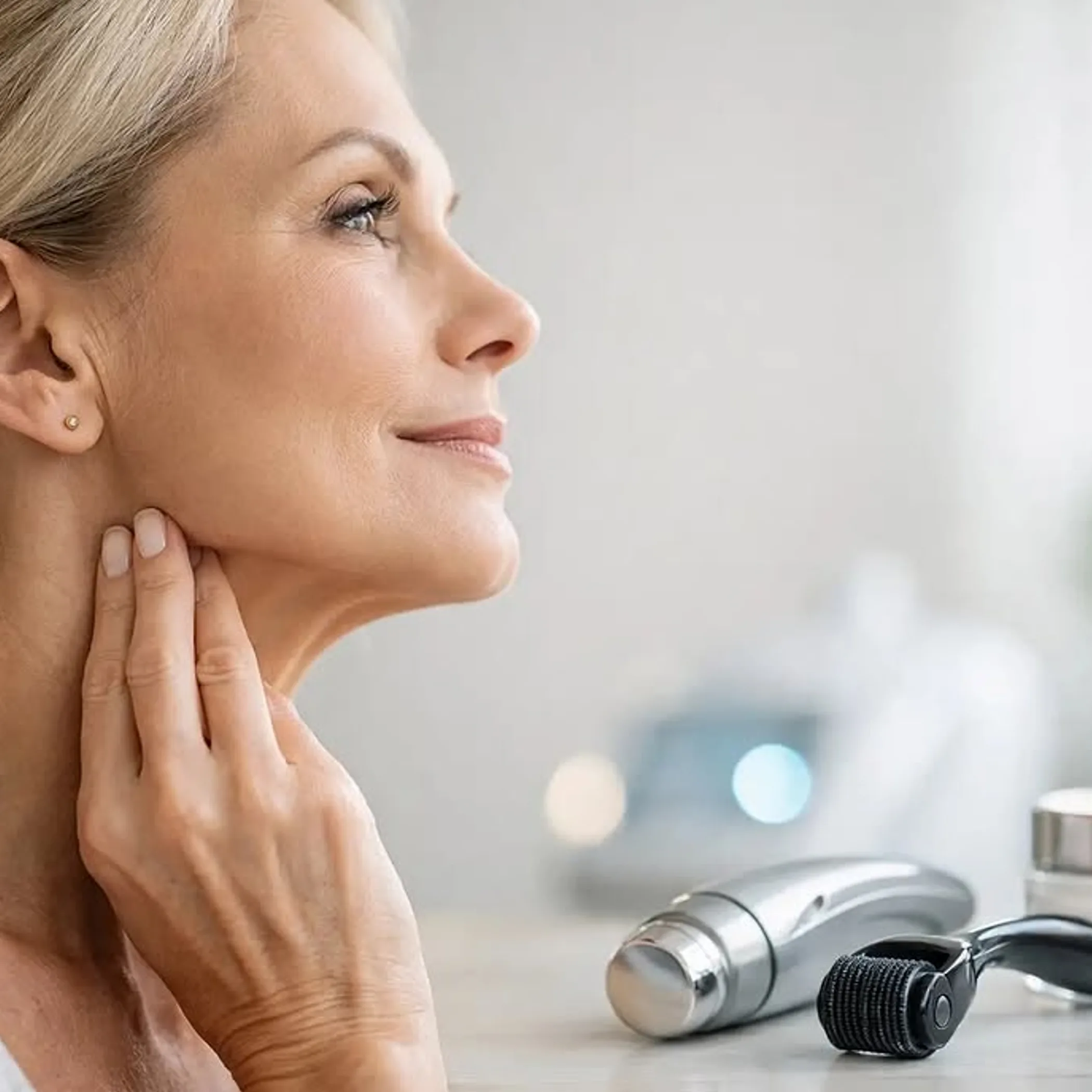
Simply put, it is the capacity of your skin to stretch and go back to where it was. Collagen and elastin are what does that work, and they are subject to your age, general health, how much sun you have seen and so forth.
When the fat volume goes down in a hurry, the support structure of the skin is not going to put itself back together at the same rate, leaving it a step behind the rest of the body. It is no wonder people are inquiring about neck firming exercises after rapid weight loss, even when the scales have told them all they wanted to hear.
The Harder Hit of Rapid Loss
Speed is everything. The quicker the loss, the less opportunity for the skin to make adjustments. Years of being stretched and it will be like an old fitted sheet: serviceable enough but lacking in youthful verve.
You will see it in the abdomen, chest, upper arms, thighs and around the jaw and neck. The face is another area where a loss of volume can give the appearance of firmness being gone without there being that much extra skin to speak of.
Variables in Your Recovery
A great deal of what is put out on the internet is wide of the mark. Two individuals can part with the same kilograms and have entirely different outcomes. At an Australian clinic we tend to be practical about it: we will factor in age, metabolic and skin quality, pregnancy history, and if the weight came off easy or rough as guts quick.
Some of it is just genetics, irritating as that is. One person has thicker, springier skin, another will show laxity sooner. Then there is the question of sun. We are a nation of hard light, be it at the beach, on the oval or in the car, and that ultraviolet exposure takes its toll on collagen. Poor nutrition during the weight loss phase, be it a lack of protein or dehydration, will also slow things down.
Do not be looking for a magic bullet with collagen. There is none. That said, adequate vitamin C and protein and no smoking will do nothing but help normal production. You will find research from Curtin University on the properties of collagen peptides, but a supplement is no substitute for a medical opinion or an operation where the situation demands it.
A Question of Time
Most want to put a military precision on the matter and medicine is not always accommodating. There is a timeline for elasticity to return but it is more of a range.
Once the weight has stabilised, you can expect some continued improvement in milder cases for months. With 6 to 12 months or more you might see some of the more obvious excess skin improve, though any sizeable folds are unlikely to retract of their own accord.
Reality Check
It is a mistake to think that once the weight is gone the body is done changing. Often it is not. Body composition will continue to alter, particularly with resistance training post weight loss. A Reality Check
| Situation | Typical Natural Change | What Often Helps | Reality Check |
| Mild laxity following a moderate amount of weight loss | Some improvement over months | Resistance training, protein, stable weight, skincare | May tighten a bit, not fully |
| More pronounced laxity in the neck, tummy or arms | Partial improvement only | Non-surgical skin tightening Australia options | Usually needs multiple sessions |
| Large scale or post-bariatric weight loss | Little in the way of rebound | Body contouring after weight loss, surgical review | Extra skin often remains |
| Rashes or mobility problems | Unlikely to resolve by waiting alone | GP review and specialist referral | Medical treatment may be needed |
General readers will find WebMD and Healthline have the broad pattern down: time and healthy habits will bring about some tightening but not when it comes to the severe loose skin that results from weight loss, for which procedural intervention is the norm. It is what you will hear from an Australian specialist in the consultation room.
What to Do at Home
There is no need to make for the clinic right away to tighten up after a weight loss. Begin with what has an effect. It is not glamorous but it is useful.
Thomas Murphy would have it that you put the basics in order before shelling out for gadgets. You will see people put their money on creams when they should be building muscle and attending to their nutrition, where the evidence is better.
Habits of a Practical Nature
Make sure your weight does not fluctuate for a few months; swings in either direction will exacerbate laxity.
Put in two to four sessions of resistance training a week, assuming your doctor has no objection. It helps shape the skin over the thighs, chest, glutes and arms by putting more muscle under it.
Bariatric patients in particular should be scrupulous with their clinician’s advice on supplements and targets.
Feed your skin what it needs for collagen, vitamin C being one such nutrient from your food or a supplement. Hydrate well. It will not get rid of surplus skin but dryness has a way of looking crepey.
And in Australia sun protection is a must. Any further UV damage is counterproductive to efforts to restore elasticity.
Common Misconceptions
Skincare is not going to deal with any meaningful excess skin and to think so is the first error. A moisturiser will make the surface look better and retinoids can alter texture, but a “firming” label on a jar is not going to make the folds of an abdomen disappear after a major weight loss.
Then there is the matter of not exercising because the area is embarrassing. That is a mistake. Resistance training is well supported as a means of improving body contouring. It does not contract the skin per se but it changes how the body presents beneath it.
Clinic Options in Australia
When you have done all you can at home and want something more than surgery yet know the result will be modest rather than anything miraculous, then a clinic is the place to go. From Laser Clinics Australia and its ilk to the plastic and cosmetic specialists, there is much on offer.
Radiofrequency and Ultrasound
With RF or ultrasound the intent is to stimulate collagen remodelling by heating the deeper tissues. Morpheus8 type devices are talked about for the face, jawline and parts of the body; radiofrequency microneedling adds a controlled micro-injury to the heat. These are suited to mild or moderate cases, not a heavy overhang. Expect to have more than one session and to pay for an improvement, not a surgical outcome.
Biostimulators and the like
For volume and support issues in the face or neck, particularly where hollowness accentuates the laxity, biostimulators are injectable products that will coax the production of collagen. Some practitioners will use BodyTite, a form of radiofrequency assistance for certain areas of the body. It is less invasive than excisional surgery but more so than a surface device, with attendant cost and risk.
The Non-Surgical Route
This is for those with stable weight and realistic aims who are dealing with anything up to moderate change. If you have enough of a tissue problem to make clothing or hygiene an issue every day, or recurrent rashes, then these options are not for you.
Spend your day making a proper appointment for a consultation instead of having a random session here and there. As for which part to address, let it be the one that is most of a bother in the real world and not the one social media is fixated on.
Surgery
If the surplus is of any consequence, surgery is the most effective way to handle it. There is no failure in that, it is merely the distinction between attempting to improve the quality of the tissue and taking it out altogether.
Procedures of a more routine nature are the body lift, arm or thigh lifts, chest work and the like, not to mention an abdominoplasty. Most will call it a tummy tuck but in medical circles it is an abdominoplasty.
Referral Pathway In Australia
Your GP is where one should begin, particularly with post-bariatric concerns or if there are problems with pain, mobility, hygiene or skin infections. The GP has the means to put symptoms on record and deal with rashes before making a referral to a specialist. To find a plastic surgeon of repute and see what separates plastic surgery from cosmetic marketing, the Australian Society of Plastic Surgeons (ASPS) is of service. For information on the safety of any registered practitioner in Australia the Australian Health Practitioner Regulation Agency is the place to look.
You will find Dr Tim Papadopoulos and Dr Mark Kohout to be Australian surgeons who have put their names to post-weight-loss body contouring in public, yet a full assessment of your health, goals and anatomy will determine if they are right for you. Rejuvaustralia comes up often in searches for cosmetic treatment but do not let branding dictate the choice of procedure, leave that to the consultation.
Costs And Practicalities
Do not expect a price that fits all, there is no such thing. Private fees are as variable as the city, hospital, surgeon and the complexity of the case. A course of non-surgical treatment can set one back hundreds to a few thousand AUD; add in theatre time, anaesthesia and the follow-up for surgery and the bill is likely to be in the many thousands.
Then there are the practicalities that tend to be an oversight: the travel, getting time off, compression garments and help at home. Recovery does not allow for a quick drive down the coast and return. If sedation or day surgery is on the cards, arrange a lift, parking at metro hospitals is not much to write home about.
Neck And Jawline Support
The neck is an odd area. After a loss of weight it can be transformed; under the wrong light or on a video call, or when you are having second thoughts in front of the barbershop mirror, even a little laxity is apparent.
No exercise is going to get rid of a good measure of loose skin on the neck, although posture and muscle tone are important. Those who have put on weight quickly and want to firm the neck might make use of some exercises as part of their strategy, but not as an end in itself.
What Helps The Neck
A bit of upper-body strength, chin tucks, some work on your deep neck flexors and posture will make a difference to how the area looks. Skincare to protect against further collagen damage from the sun and to improve texture is also helpful.
Where there is pronounced laxity, a clinic may put forward biostimulators, ultrasound tightening or radiofrequency microneedling. But if you are dealing with a lot of redundant skin, a surgical review is of more use than to put your money into low-yield treatments time and again.
How To Pick A Good Provider
Caution is its own reward here. The top treatments for loose skin in Australia are not necessarily the ones with the most polished advertisements but those that are well suited to the patient. Make note of credentials and how a provider manages complications and his experience with post-weight-loss patients. The consultation should be an examination with frankness about what can be achieved. I would be inclined to walk away from anyone who says a machine alone can give you surgical results.
Consultation Checklist
Put these questions to them: Is this true excess skin or merely mild to moderate laxity?
What is a realistic outcome and what sort of downtime is involved, and over how many sessions?
Give me the full cost in AUD, extras, garments, medications and reviews included.
If I am not content with the result or a complication arises, what then?
And how long must my weight be stable prior to any treatment? Surgery is hardly for the novice, in my view, absent a good support system at home. One would do well to put some thought into the recovery plan before making any arrangements if work is of a physical nature or you are living alone part of the time and have to share parenting duties.
Risks, Warning Signs, And Medical Advice
Loose skin is regarded by many as a cosmetic matter, yet there is more to it than that. Moisture in the folds of the skin can be a source of irritation, odour and even fungal infection, with the possibility of breakdown. It is then a health issue, not merely one of looks.
Should you experience any of the following: pain, bleeding, rashes that will not go away, ulceration, numbness or sudden unexplained changes, put in for medical advice. The same applies when distress over body image gets to be too much; the mental and the physical are frequently intertwined.
Bariatric Aftercare
Those under bariatric aftercare require a degree of guidance that is tailored to them, given the complexities of skin problems, supplementation and nutrition. Make sure to follow up with your team. Healing and the quality of tissue can be compromised by a lack of protein or deficiencies in iron and zinc to name a few.
Current practice in Australia favours a multidisciplinary approach involving the GP, a dietitian, an exercise professional, the bariatric and where called for the plastic surgeon. You will find that of more use than what you might piece together from strangers on the internet at 11.30 at night.
Thomas Murphy’s Take
Be patient in the wake of a rapid loss of weight and its effect on skin elasticity but do not be naive. There will be some rebound and some will not come. It is a question of discerning whether you are in the “give it time” phase or just waiting for something to right itself that probably won’t.
Have a sensible expectation and see to your nutrition, skin hydration and resistance training while you are at a stable weight. Should you need to consider surgical or non-surgical avenues, go to a qualified provider in Australia. An honest plan should come before the money, it is less trouble in the end.
Frequently Asked Questions
What Is The Best Treatment For Loose Skin After Weight Loss?
It is a matter of severity. Where laxity is mild or moderate you may see results from holding your weight and doing resistance training, or non-surgical means like RF or ultrasound skin tightening, radiofrequency microneedling and biostimulators. Surgery, an abdominoplasty or body lift for instance, is generally the way to go with any considerable excess.
Why Do My Arms Get Flabby After Weight Loss?
The upper arm is prone to laxity once weight has been shed; the skin has been put under stretch and there is likely less muscle volume below it. Put some muscle back in the arms and shoulders and the shape will be better, though you may need a surgical review or body contouring for skin that is hanging.
Will Loose Skin Tighten Up After Losing Weight?
In time it can, particularly if you are of a younger age, have good quality skin and have not put the weight on and off in a hurry. But for the most part substantial excess skin, say from a major or fast loss, will not fully retract on its own.
How To Tighten Neck Skin After Weight Loss?
Posture and strength work are a good place to start along with sun protection and skincare. Some neck firming exercises can be of support after a rapid loss but keep your expectations in check. For more pronounced laxity a visit to a clinic to discuss Morpheus8, biostimulators, RF or ultrasound is in order. With significant excess, surgery is the more effective course.
Are Collagen Supplements Worth Trying?
They may do something for skin quality in some, but they are no sure fire solution for excess skin. Consider them a support tool at best and not a substitute for your protein and vitamin C, or for having a proper medical assessment and the procedures that may be warranted.
